Frequently Asked Questions About Starting Martial Arts
Shin Gi Tai Martial Arts Academy provides beginner friendly Martial Arts classes for children, teenagers and adults at our dedicated academy in Winchester. These frequently asked questions explain how to choose a class, what to expect from your free taster, how our training works and what makes our Martial Arts Academy different.
Choosing a Class.
Which Martial Arts class is best for me or my child?
The most suitable class depends on the student’s age, interests, fitness level and reasons for starting.
Children train in separate programmes for ages 4–6, 7–10 and 11–16. Adults can choose from Adult Martial Arts, Muay Thai, ladies only kickboxing and Tai Chi.
Some members want to improve fitness, while others are interested in confidence, self-defence, stress relief, traditional martial arts or learning an entirely new skill. If you are unsure, speak to one of our coaches and we will help you choose the most appropriate programme.
What Martial Arts do you teach in Winchester?
Our Children’s and Adult Martial Arts programmes include skills drawn from Karate, Kung Fu and Judo. This gives students experience of kicking, striking, blocking, throwing, grappling, groundwork and practical self-defence.
We also offer dedicated Muay Thai (Thai Boxing) ladies only Chinese kickboxing and Yang style Tai Chi Chuan classes.
Each programme has its own emphasis, but all are delivered through structured, progressive and professionally coached training.
Are your Martial Arts classes suitable for complete beginners?
Yes. Most of our members arrive with no previous martial arts experience.
Our syllabus introduces techniques progressively, beginning with the fundamental movements and knowledge needed to train safely and successfully. Coaches demonstrate each skill clearly, provide individual feedback and adapt exercises to suit different abilities.
You will never be expected to know what to do before you have been taught.
What ages do you teach?
Children can start from age four. Our children’s programmes are divided into:
- Rising Heroes: ages 4–6
- Young Legends: ages 7–10
- Urban Warriors: ages 11–16
Our adult programmes generally start from age 16 and include Adult Martial Arts, Muay Thai, Ladies only Kickboxing and Tai Chi.
Can different members of the same family train at Shin Gi Tai?
Yes. Shin Gi Tai is a family-run and family-focused academy, with children, parents and sometimes grandparents all training with us.
Family members do not necessarily train in the same lesson because our classes are organised by age and programme. However, everyone can become part of the same academy community, share achievements and support one another’s progress.
Can I speak to a coach before booking?
Yes. If you have questions about a particular class, an injury, additional needs, confidence concerns or whether a programme will be suitable, please contact us before booking.
One of our coaches will discuss your circumstances and help you decide on the most appropriate next step. We would much rather answer your questions properly than have you spend three weeks wondering whether you are “fit enough” to press the booking button.
Can I or my child start Martial Arts at any time of year?
Yes. Beginners can usually join throughout the year, subject to space being available in the appropriate class. You do not need to wait for the beginning of a school term or already know the syllabus. Our coaches introduce new students to the fundamentals and adapt activities so they can settle in without being expected to keep up with experienced members immediately.
In Tai Chi, we hold regular beginners courses, which we publicise on social media.
How long does each Martial Arts class last?
Class lengths are matched to the age and developmental stage of the students:
- Rising Heroes, ages 4–6: 35 minutes
- Young Legends, ages 7–10: 40 minutes
- Urban Warriors, ages 11–16: 45 minutes
- Adult Martial Arts, Muay Thai, ladies-only kickboxing and Tai Chi: 60 minutes
Current days and times can be found on our Winchester Martial Arts timetable
Quick facts
History:
Established in 1992. 500+ members across Hampshire.
Classes:
Adults Martial Arts, Muay Thai, Ladies only Kickboxing, Tai Chi,
Children’s Martial Arts for 4 – 6, 7 – 10 and 11 – 16 years old.
Level:
Beginners welcome
Location:
Easton Lane, Winnall, Winchester
Free taster classes
How do I book a free taster class?
Choose the programme you are interested in and click on the link to arrange your free taster class.
Once your booking has been received, a member of our team will contact you to confirm the class and answer any initial questions. We will also ask about relevant injuries, medical conditions or individual needs so the coach can prepare appropriately.
What happens during a free taster class?
Your taster is an opportunity to experience a genuine Shin Gi Tai Martial Arts class, meet the coaches and see how our academy operates.
You will be welcomed by a member of the team, shown where to go and introduced to the coach. During the lesson, you will join in with suitable exercises and techniques, with guidance provided throughout.
You are not expected to keep up with experienced members or perform techniques you have never seen before. You will be helped to progress at your speed.
Is the taster class genuinely free?
Yes. The taster class gives you or your child the opportunity to experience the programme before deciding whether to become a member.
We want you to understand our coaching style, academy culture and training expectations before making a decision. There is no obligation to join after attending.
What should I wear and bring to my first class?
Wear loose, comfortable sports clothing without zips or hard fastenings. A T-shirt with tracksuit bottoms or leggings is normally ideal.
Please bring a drink and remove watches and jewellery before training. If an item cannot be removed, speak to the coach so it can be safely covered.
You do not need to purchase a martial arts uniform or equipment before attending your taster class.
How early should I arrive?
Please arrive a little before the class begins. This gives you time to find the academy, meet the team, complete any necessary checks and prepare without feeling rushed.
If it is your first visit, arriving early also gives the coach an opportunity to discuss any injuries, concerns or individual needs before training starts.
Can parents or family members watch the class?
Yes. Parents and carers are encouraged to watch children’s classes, and adults are welcome to bring someone with them.
Our Winchester academy has a dedicated viewing area with comfortable seating, air conditioning and a clear view of the training space. Watching helps parents understand what their child is learning and allows them to support their progress positively.
What happens after the taster class?
After the class, you will have an opportunity to ask questions and discuss how the session went.
If you or your child would like to continue, our team will explain the appropriate membership, training schedule, uniform and equipment requirements. There is no obligation to make an immediate decision.
Will all membership and training costs be explained before I join?
Yes. Before your free taster class, our team will explain the appropriate membership, joining arrangements, uniform or protective equipment requirements, grading costs and relevant membership details before you make a decision.
There is no obligation to join after the taster, and you will have an opportunity to ask questions so that you understand the commitment involved.
Membership, Attendance and Equipment
How does membership work?
Our memberships are structured around attending two classes each week.
Members follow a progressive syllabus, receive regular coaching and feedback, and work towards meaningful long-term improvement. Training twice weekly gives students enough repetition to retain what they learn while allowing coaches to build skills safely from one lesson to the next.
Why do members train twice each week?
Martial Arts is a physical skill, and physical skills improve through regular, consistent practice.
Training twice weekly helps members remember techniques, develop coordination, improve fitness and maintain momentum. Children also benefit from the routine, while adults generally notice progress much faster than they would from occasional attendance.
Consistency is one of the most important factors in building confidence and achieving lasting results.
Will I need a uniform or equipment?
You do not need a uniform or specialist equipment for your free taster class.
After joining, the uniform and protective equipment required will depend on the programme and stage of training. Our team will explain what you need, when you need it and how each item is used.
We do not expect beginners to arrive looking as though they have emptied an entire Martial Arts shop into a sports bag.
What happens if I miss a class?
We understand that illness, holidays, work and family commitments occasionally affect attendance.
If you know that you will be absent, please let our team know. They can then advise of an appropriate alternative class for a catch up session.
Are gradings part of normal weekly classes?
Gradings are separate, professionally organised events that allow students to demonstrate the skills and knowledge required for their next level.
Students are only recommended for grading when their coach believes they are ready. A grading is not simply awarded for attending a certain number of lessons; it recognises genuine progress and an appropriate standard of performance.
Children’s Martial Arts
Why are children divided into different age groups?
Our Children’s Martial Arts classes are split by age because a four year old learns very differently from a teenager. Attention span, coordination, communication, confidence, emotional maturity and physical development all change as children grow.
Our separate 4–6, 7–10 and 11–16 programmes allow coaches to adapt the lesson structure, teaching language, activities and expectations to each developmental stage.
This makes lessons more engaging, age-appropriate and effective.
Can a shy or nervous child try Martial Arts?
Yes. Many children feel uncertain when they first enter a new environment, particularly if they are naturally quiet or have had a difficult experience elsewhere.
Our coaches introduce nervous children gradually, using encouragement, structure and achievable steps to help them settle. Children are not pressured to perform in front of everyone or immediately demonstrate confidence they have not yet developed.
Parents are welcome to watch and provide calm, positive support.
Are your Martial Arts classes suitable for children with ADHD, autism or other additional needs?
We regularly adapt our coaching for different abilities, communication needs, confidence levels and learning styles.
Suitability depends on the individual child, the programme and the level of support they require. We therefore recommend speaking to a coach before booking so we can understand your child’s needs and consider how best to support them.
We aim to be inclusive, but we will always be honest about whether a particular class environment is appropriate.
Will learning Martial Arts make my child aggressive?
No. Properly taught Martial Arts should develop self-control, respect, responsibility and an understanding of when physical skills must not be used.
Children learn that Martial Arts techniques are practised safely and responsibly. We teach awareness, avoidance, communication and sensible decision-making alongside physical self-defence.
The objective is not to create children who want to fight. It is to help them become confident enough to feel that they don’t need to.
Is sparring compulsory for children?
Children learn partner work gradually through pre-arranged drills, pad work and carefully controlled exercises.
As their skills and understanding develop, appropriate forms of controlled sparring may be introduced. Children are never thrown into uncontrolled fighting and they never participate in hard or full contact.
Training is adapted to age, experience and confidence, with safety and responsible partnership placed ahead of winning.
How is my child’s progress measured?
Progress is measured through our structured syllabus, regular coaching observations and the child’s development over time.
Coaches consider technical ability, understanding, effort, attendance, confidence, behaviour and the ability to work safely with others. Children may also receive weekly, monthly and annual recognition for effort and achievement.
We assess children against their own development rather than continually comparing them with classmates.
How long does it take to reach Black Belt?
For a child training consistently twice each week, reaching Black Belt typically takes approximately five years. The minimum age at which one of our students can achieve Black Belt is ten, but this is quite rare.
This is an approximate pathway rather than a guaranteed deadline. Progress depends on attendance, effort, maturity, technical development and the ability to demonstrate the required standard.
A Shin Gi Tai Black Belt represents genuine knowledge, skill and character and not simply time served.
Can Martial Arts help my child develop confidence, focus and discipline?
Martial Arts can support these qualities through structured routines, achievable challenges, regular feedback and gradual progression. Children learn to listen, practise patiently, respond positively to correction and continue working when something initially feels difficult.
Changes do not happen overnight, and every child develops differently. However, consistent twicenweekly training gives children repeated opportunities to build genuine confidence, concentration, self-control and resilience.
Can Martial Arts help a child who is being bullied?
Martial Arts cannot guarantee that bullying will stop, but it can help children develop greater confidence, awareness, assertive communication and the ability to set appropriate boundaries.
We teach children to recognise problems early, seek help from trusted adults, avoid unnecessary confrontation and use physical self-defence only when genuinely necessary.
Martial Arts should support—not replace—the safeguarding procedures of the child’s school.
This guide will help to provide some information on how to deal with Bullying.
Adult’s Martial Arts
Am I too old to start Martial Arts?
Probably not. Adults begin Martial Arts at many different ages and for many different reasons.
Training can be adapted to your starting point, fitness and goals. Those looking for dynamic physical training may enjoy Adult Martial Arts, Muay Thai or ladies-only kickboxing. Those wanting lower-impact movement, balance and wellbeing may prefer Tai Chi or age appropriate Adult’s Martial Arts training.
Age matters far less than choosing an appropriate programme and receiving suitable coaching.
Do I need to get fit before starting?
No. Getting fit before joining a Martial Arts class is rather like trying to become fluent before taking a language lesson.
Our coaches adapt exercises to different starting levels and help you improve gradually. As you train consistently, you can develop cardiovascular fitness, strength, mobility, balance and coordination while learning meaningful skills.
You only need to be willing to begin.
Can I train with an old injury or medical condition?
In most cases, training can be adapted around an old injury or physical limitation.
Please tell us about any injury or medical condition before your taster class so the coach can consider suitable adjustments. Depending on the condition, we may recommend obtaining advice or clearance from an appropriate healthcare professional.
Suitability is assessed individually because the right answer depends on both the person and the programme.
Do I have to fight, spar or compete?
You do not have to enter competitions, and our classes are not uncontrolled fight sessions.
Partner training begins with pre-arranged exercises that teach distance, timing and safe control. Students practise techniques using pads and focus mitts before progressing to more responsive partner work.
Controlled sparring may be introduced gradually in appropriate programmes, but safety, technical development and being a responsible training partner always come first.
Which adult class is best for improving fitness?
Muay Thai and Ladies only Kickboxing provide energetic sessions involving striking, movement, pad work and conditioning.
Adult Martial Arts combines physical fitness with a broader syllabus of striking, throwing, grappling and self defence skills.
Tai Chi offers lower impact training focused on controlled movement, mobility, balance, posture and relaxation.
The best choice depends on the type of training you enjoy and the results you want to achieve.
Can experienced Martial Artists join?
Yes. We welcome adults with previous experience as well as complete beginners.
Tell the coach about your previous style, grade and training history. We will assess your current knowledge and help you integrate into the most appropriate class.
Previous experience is respected, but grades from another organisation or martial art are not automatically assumed to represent exactly the same syllabus or standard.
Do you offer Ladies only Martial Arts classes?
Yes. Shin Gi Tai has delivered ladies-only training for more than 15 years.
Our ladies only Chinese kickboxing classes provide a welcoming and supportive environment in which women can develop fitness, confidence, striking skills and practical self-defence.
Many members begin as complete beginners, and several women who originally joined our ladies only classes have progressed into senior coaching roles within Shin Gi Tai.
Is Tai Chi suitable for older beginners?
Yes. Tai Chi is particularly suitable for adults looking for gentler, lower impact exercise.
Our Yang-style Tai Chi classes use controlled movements, breathing exercises and progressive practice to support balance, mobility, coordination, posture and relaxation. No previous experience is required.
Exercises can often be adapted to suit different physical needs, although anyone with a medical concern should seek appropriate professional advice before beginning a new form of exercise.
Tai Chi is also suitable for younger adults as well.
What is the difference between Adult Martial Arts, Muay Thai, Ladies-Only Kickboxing and Tai Chi?
Adult Martial Arts provides the broadest syllabus, combining striking, blocking, throwing, grappling, groundwork and self-defence skills drawn from Karate, Kung Fu and Judo.
Muay Thai concentrates on dynamic stand-up striking using punches, kicks, knees and elbows.
Ladies-Only Kickboxing offers energetic fitness, striking and self-defence training in a supportive women-only environment.
Tai Chi provides gentler, lower-impact training focused on controlled movement, balance, mobility, posture and relaxation.
Our Winchester Martial Arts Academy
Where is Shin Gi Tai Martial Arts Academy?
Our dedicated Winchester Martial Arts Academy is located at:
Shin Gi Tai Martial Arts Academy
County House
Easton Lane
Winchester
Hampshire
SO23 7RU
We are based in Winnall and welcome members from across Winchester and the surrounding Hampshire area.
You can also find us through Google Maps by searching for “Shin Gi Tai Martial Arts Academy – Winchester.”
Is parking available?
Yes. Free parking is available directly outside the academy.
Additional overflow parking is available after 4:30pm in front of County Glass within the main car park. Please park considerately and follow any signage displayed at the venue.
What facilities does the academy have?
Our Winchester location is a full time professional Martial Arts Academy.
It has a large dedicated accessible training area with specialist Martial Arts flooring, extensive pads and training equipment, heating and air conditioning.
There is also a comfortable air conditioned parent and visitor viewing area with seating, sofas, a water fountain and a free coffee machine.
What qualifications do your coaches hold?
Every Shin Gi Tai coach is professionally qualified and holds a minimum Level 2 coaching qualification recognised through an appropriate Sport England National Governing Body.
Our coaching team has more than 250 years of combined experience. Head Coach Bryan Andrews has approximately 45 years of martial arts experience and more than 40 years of teaching experience. His qualifications include a Master’s Degree in Advanced Sports Coaching Practice, senior coaching awards and Black Belts across five martial arts, including 7th Dan Karate and 7th Degree Kung Fu.
All coaches undertake continuing professional development to maintain and improve their coaching.
Are your coaches DBS checked and first-aid trained?
Yes. Every coach and member of staff has a current DBS check and is trained in first aid and safeguarding.
Our coaches also receive ongoing education covering technical development, coaching practice, safety, child development and professional standards.
What safeguarding standards do you follow?
Safeguarding is a fundamental part of how Shin Gi Tai operates.
We achieved the Safeguarding Code in Martial Arts kitemark in 2018 and continue to maintain clear safeguarding, child-protection, equality, anti-bullying and coaching-conduct policies.
Concerns can be raised with our Head Coach or designated welfare team, and our relevant policies are available through the website.
How do you make training safe?
Lessons are planned and supervised by qualified coaches. Techniques are introduced progressively, and students are taught how to work safely and responsibly with partners.
Our academy uses specialist Martial Arts flooring and appropriate training equipment. Partner drills, pad work, throwing, groundwork and sparring are introduced according to the student’s age, ability and experience.
Safety does not mean removing every challenge. It means providing the right challenge with the appropriate control, supervision and preparation.
What days and times do classes run?
Children’s classes run on weekdays, with separate daily sessions for ages 4–6, 7–10 and 11–16.
Adult Martial Arts, Muay Thai, ladies-only kickboxing and Tai Chi run at different times throughout the week.
Please visit our current Winchester Martial Arts timetable before booking because class availability and times may occasionally change.
Training and Progression
How often should I train to make progress?
We recommend two classes each week.
This provides sufficient repetition to develop physical skills while giving the body and mind time to recover and process new information between sessions.
Regular attendance also helps students build relationships, maintain motivation and progress consistently through the syllabus.
How does the belt system work?
Students follow a progressive syllabus in which new techniques, knowledge and responsibilities are introduced at each level.
Early grades focus on fundamental movement, control and understanding. As students progress, they develop more complex combinations, practical applications, partner skills and a deeper understanding of the martial art.
The exact grading pathway depends on the programme being studied.
How frequently are gradings held?
Grading opportunities are organised regularly, but students are only invited when their coach believes they are ready.
Readiness is based on attendance, technical standard, knowledge, effort and the ability to perform safely and consistently. Students do not automatically grade simply because a certain amount of time has passed.
This protects the meaning and credibility of every grade awarded.
Do students have to enter competitions?
No. Competition is available for suitable students who are interested, but it is not compulsory.
Some members enjoy testing their skills competitively, while others train for confidence, fitness, self-defence, wellbeing or personal development. Both pathways are respected.
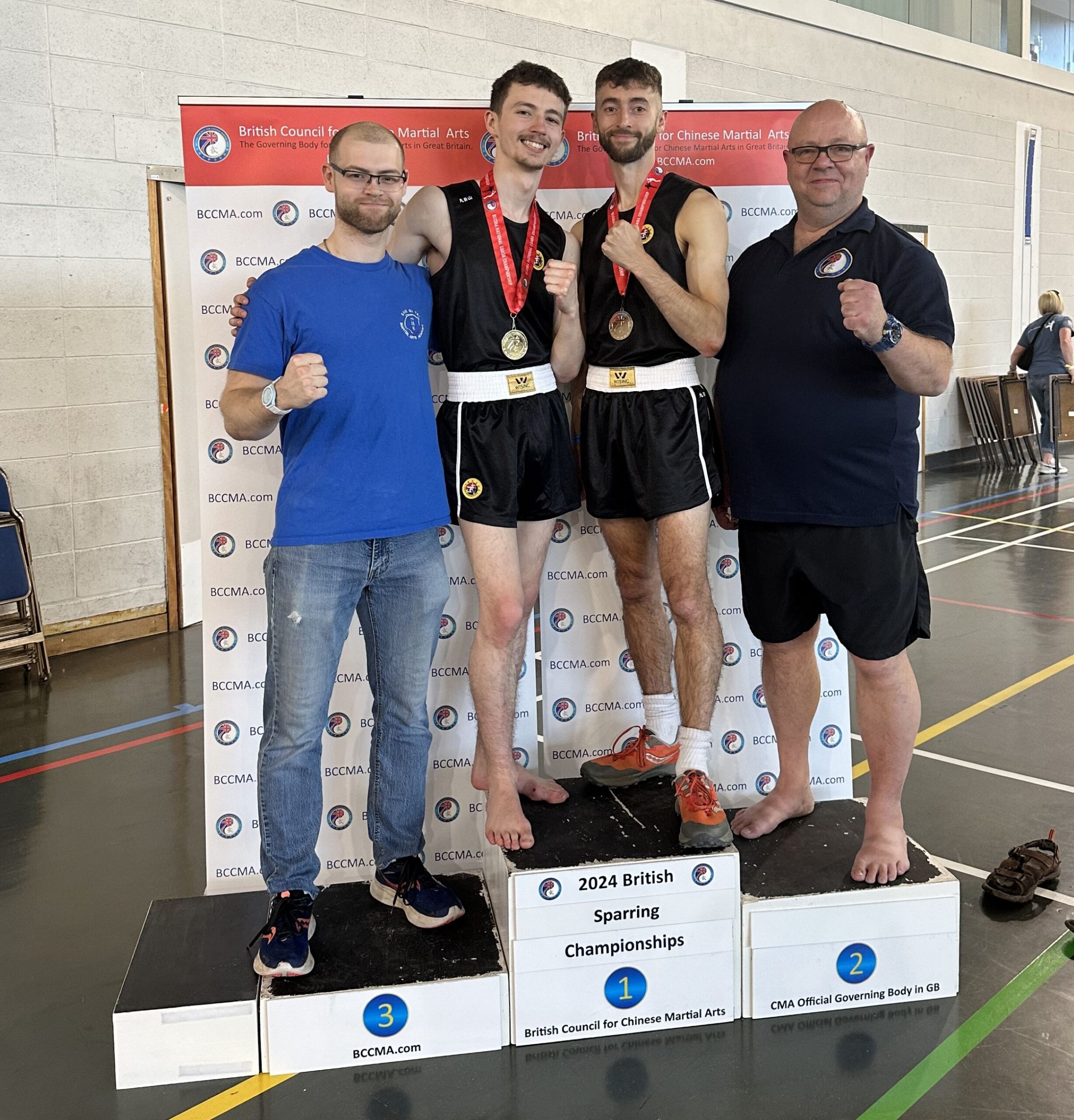
Our competitive record demonstrates the level of coaching available, but nobody has to become a competitor to be a valued member of Shin Gi Tai or to win a belt.
Is Martial Arts suitable for self-defence?
Yes. Our syllabus teaches physical skills such as movement, striking, blocking, throwing, grappling and escaping from holds.
However, effective self-defence begins before physical contact. Students also learn awareness, avoidance, boundary setting, decision-making and the responsible use of force.
Our aim is to give members greater confidence and practical ability while helping them understand that avoiding unnecessary confrontation is always the best outcome.
What equipment is used during classes?
Depending on the programme, students may use focus mitts, kick shields, punch bags, protective equipment and other specialist training tools.
Equipment allows techniques to be practised with appropriate resistance, accuracy and control. It also helps members develop fitness, timing, coordination and power safely.
Coaches explain how each item should be used and teach members to look after both their equipment and their training partners.
Book your free taster class.
To book your FREE taster session click the button below.
Speak to a Coach.
Please enter your contact details below with the questions that you have for a coach about how we can help you. Please tell us which class you are interested in.