By Bryan Andrews | Head Coach, Shin Gi Tai Martial Arts Academy, Winchester
 When people think about success in Martial Arts, they often picture a medal, a trophy or a black belt. These are visible achievements. They photograph well, they give us a clear moment to celebrate and they tell a straightforward story. Yet some of the most important victories in Martial Arts are much quieter. They are the moments that may never appear on a podium, but which change how a person sees themselves and what they believe they can do.
At Shin Gi Tai Martial Arts Academy in Winchester, we celebrate progress as well as performance. A student can be proud of winning a competition, passing a grading or earning a new belt. At the same time, we also want them to notice the growth that comes before those milestones and, often, lasts longer than them. That might be the courage to enter the dojo for the first time, the confidence to speak up in class, the patience to practise a difficult skill or the decision to return to exercise after years away from it. Progress might be an autistic child able to go through a whole class without needing to stop. It can look like the person with dyslexia following one of their class-mates to finish a sequence of moves for the first time.
This approach is not about lowering standards. We set high standards, work carefully towards them and take technical development seriously. It is about recognising that not everyone starts from the same place, travels at the same pace or needs the same thing from their Martial Arts journey. Progress is personal. When we understand that, we become much better at noticing it, supporting it and celebrating it.
The success you cannot always photograph
Competition success is easy to identify. Someone wins a match, receives a medal and has a clear result to show. There is absolutely a place for that, and we are proud of every member who tests themselves in competition. However, competition results do not tell the whole story of a person’s development. They cannot show the student who arrived at class feeling nervous and stayed long enough to enjoy themselves. They cannot show the adult who has made training part of their week after years of putting everyone else first. They cannot show the quiet child who now has the confidence to introduce themselves.
These moments matter because they are often the building blocks of greater things. A child who learns to step onto the mats independently may later become the student who helps a newer child feel welcome. An adult who returns to activity may begin to move more freely, sleep better or feel more in control of their time. A teenager who learns to keep working through a difficult technique may carry that resilience into school, work or relationships. The visible milestone is still valuable, but it is usually the result of many smaller wins that happened first.
Progress needs to be personal
A first step can be a major win
For a shy four year old who rarely leaves a parent’s side, the first major achievement may simply be walking onto the mats for a taster class. It may be joining a warm up, standing with the group or staying for the whole session. To someone watching from the outside, these may look like very small steps. To that child and their family, they can be enormous. They show trust, courage and a willingness to try something unfamiliar.
As confidence grows, progress may take a different form. The same child might put their hand up to answer a question, make eye contact when speaking to an adult or introduce themselves to somebody new. These are the kinds of changes that parents are often best placed to notice. A child may not announce that they have become more confident. Instead, you may see it in the way they enter a room, speak to a coach, ask to attend a class or explain what they have learnt at home.
Returning to yourself as an adult
Adult progress can look very different. Many adults spend years focused on work, children, family responsibilities or caring for others. Exercise, hobbies and personal goals gradually move to the bottom of the list. Returning to a class can feel daunting, especially if you do not think of yourself as sporty or if you have not exercised for a long time. Making the decision to take an hour for yourself is a meaningful achievement in its own right.
For some members, success is regaining balance, mobility or functional movement. It may be becoming more comfortable getting down to the floor and standing back up. It may be improving posture, moving with less stiffness or feeling more capable in everyday tasks. A seventy year old does not need to move like a twenty five year old to be making excellent progress. The right question is not, ‘How do I compare with someone else?’ It is, ‘What can I do now that I found difficult before?’
 Learning to risk getting it wrong
One of the greatest barriers to progress is the fear of failure. People can avoid a challenge because they are worried about looking foolish, making a mistake or being judged by others. This happens in sport, at school, at work and in almost every part of life. In Martial Arts, it may appear when a student hesitates to try a technique because they believe they will get it wrong. The temptation is to remain with the familiar movement, where the risk of embarrassment feels lower.
A good class makes room for that uncertainty. Students are shown how to try, make an error, receive a correction and try again. They learn beside people who have faced the same difficulty before them. They see more advanced students practising carefully too, rather than pretending everything comes naturally. That changes the meaning of a mistake. It becomes information. It tells the student what to work on next.
This is why effort deserves specific praise. Instead of saying only, ‘Well done’, a coach can identify what improved: perhaps the student kept their balance, remembered the sequence, used better control or stayed focused after a mistake. Specific praise gives people something real to repeat. It helps them understand that success is not a vague compliment. It is the result of a particular action, choice or improvement they can build on next time.
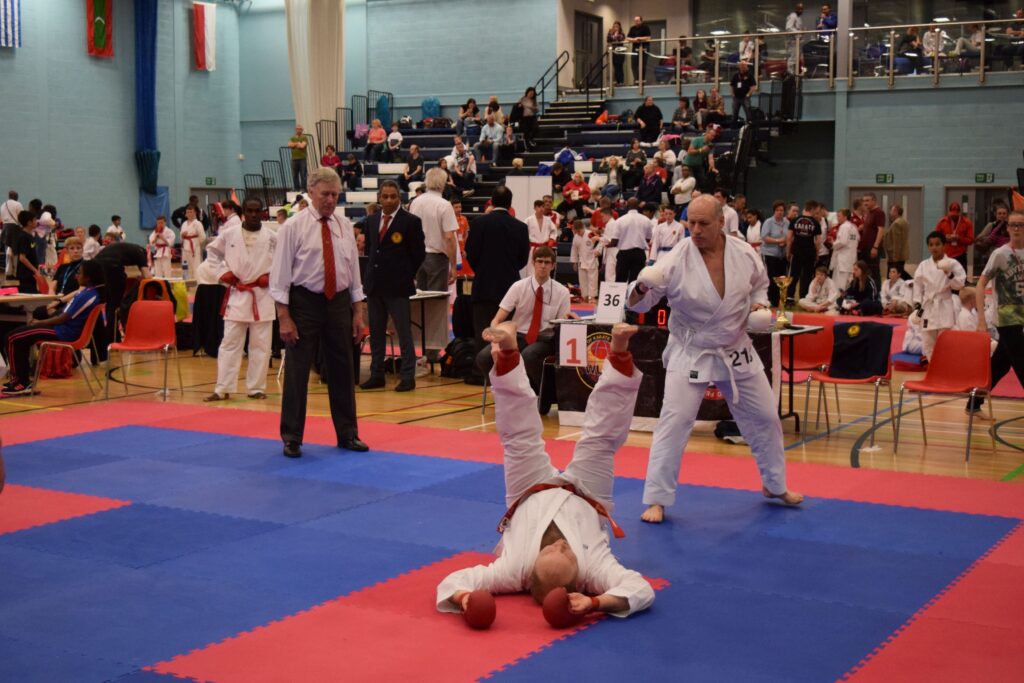
(This photo is Sensei Bryan in a competition when it all went wrong)
A black belt is a milestone, not a comparison
A black belt matters. It represents a serious commitment to learning, practice and personal development. It is a major milestone, and students should be proud when they reach it. However, it should not become the only measure by which a Martial Artist sees themselves or others. If belts, medals and technical ability are the only things we notice, we risk overlooking the progress that has made them possible.
People develop in different ways. One student may be naturally quick, coordinated and confident in front of a group. Another may need more time, but show extraordinary persistence, control and self awareness. One person may progress quickly in a particular technique, while another finds their strength in focus, teaching others or staying calm under pressure. A strong coaching system recognises these differences while still maintaining clear, meaningful standards.
How coaches recognise readiness
We are sometimes asked how we decide whether several people are ready for their black belt. The honest answer is that there is an element of judgement. There is no realistic standard that says every person must look identical, move exactly the same way or express their skill in the same style. Human beings are not identical, and their Martial Arts should not be a pale imitation of one another.
What matters is whether the person demonstrates the right level of understanding, effort, discipline, control and commitment for the grade. Coaches look at the individual’s technique, their balance, movement, focus, ability to listen and willingness to keep improving. They also consider whether the student understands the purpose behind what they are doing. A black belt is not only about performing a sequence. It is about showing the habits and mindset needed to continue learning beyond the grading itself.
Skills that travel into everyday life
Martial Arts does not exist in a separate compartment from the rest of life. The habits built in training often travel with a student into other places. Setting a goal, practising when progress is slow, listening to feedback and returning after disappointment are useful skills in school, college, university, work and relationships. They do not guarantee that life will be easy. They do give people a method for responding when something is difficult.
A student learns that a challenging technique usually becomes more manageable when it is broken into smaller parts. The same principle applies outside the dojo. A large piece of coursework, a difficult project at work or a personal goal can feel overwhelming when viewed all at once. It becomes more possible when you identify the next step, take it seriously and keep returning to it. This does not make Martial Arts a shortcut to success. It gives people repeated practice in the process of effort and improvement.
A lesson carried into a university interview
One former Shin Gi Tai student had earned her black belt before attending an interview for a place on a longer degree course at Cardiff University. During the interview, a lecturer explained that the course might involve being awake at midnight to help at a farm with the birth of an animal. The work would be demanding, and not everyone would cope with it comfortably.
“I have taken a black belt test at Shin Gi Tai. If I can do that, I can do anything.”
Former Shin Gi Tai student, speaking at a Cardiff University interview
That response was not about claiming that a black belt test is the same as every challenge life can bring. It was an expression of self belief built through experience. She had done something difficult, prepared for it, kept going when she was tired and reached the other side. The point was that she had evidence from her own life that she could meet a demanding situation with effort and resilience. That is one of the most valuable things training can give a person.
What 45 years of training teaches about success
After more than forty five years of training and nearly as many years of coaching, I’ve won national, international, European and world gold medals. Those moments were important and are rightly remembered. Yet they are not what I would describes as my greatest successes in training and coaching. The achievements that stay with me are the changes in people’s lives: the confidence that grows, the friendships that form and the individual who discovers they can do far more than they first believed. The girl that walked into class with a life threatening conditioning, who’s now been training for several years, has made lots of great friends and spends time raising money for charity to help others. The boy that was bullied at school and found a whole new friendship group amongst his class mates and now wants to become a teacher and help others. The single mum going through a messy divorce and the other ladies arranging a party for her to attend plus a babysitter to look after her little one. The couple walking home from the train station able to successfully defend themselves when attacked. This is what success looks like to me, forgot medals, forget belts, it’s about being kind to other people and importantly to yourself.
Friendships are a form of progress
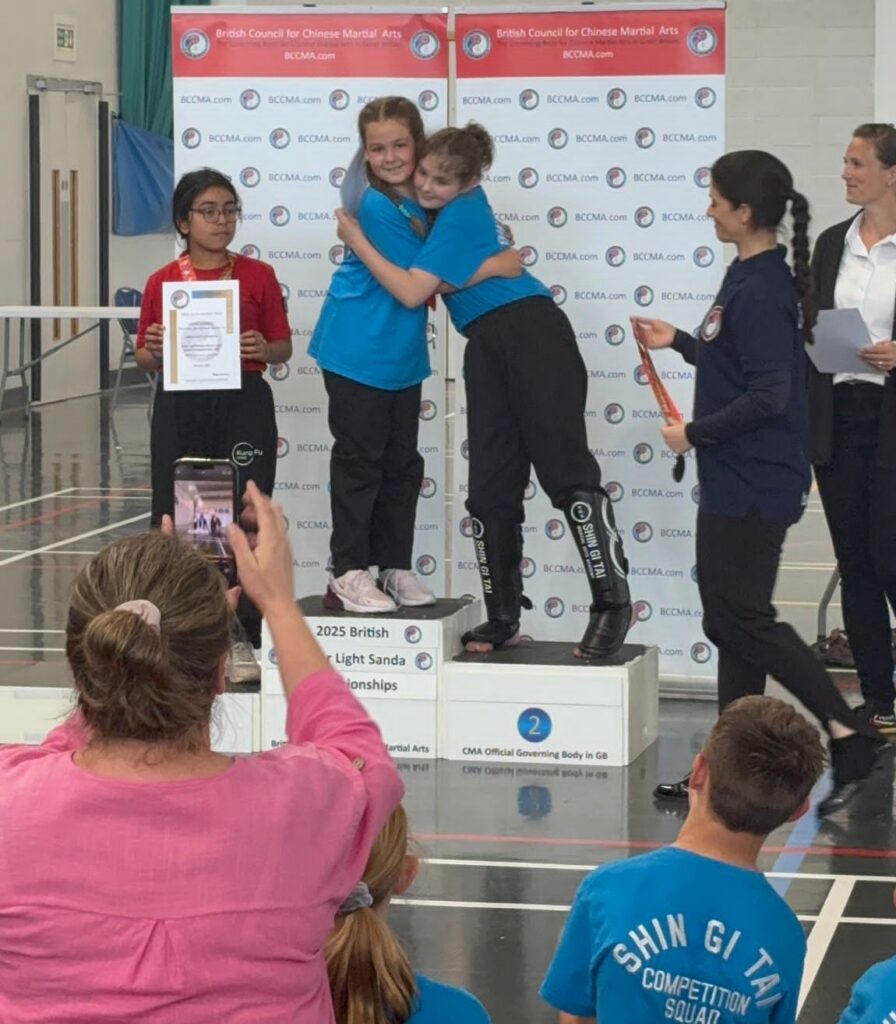 One example is the child who arrives feeling isolated, saying they have no friends at school or that they are being bullied. Over time, they become part of the group. They find people to train with, socialise with and share ordinary life with. They may go to the cinema, visit one another’s homes or simply have someone who is pleased to see them at class. That kind of connection cannot be shown on a grading certificate, but it can make a profound difference to a young person’s confidence and sense of belonging.
The same is true for adults. Friendships often grow around the regular rhythm of training. Members share an hour of effort, encouragement and learning each week. Those relationships may later include a meal out, a coffee, a family event or practical support when someone needs it. A club becomes stronger when people are not merely attending the same class, but are genuinely invested in one another’s wellbeing.
Wins that cannot be measured by a medal
Another powerful example is the member whose doctors and consultants had warned that they might not be able to walk within six months and would need to prepare for a wheelchair. Several years later, that person was walking without walking sticks, training hard and enjoying the progress they had made. Their story is personal and should be treated with respect. It is not a promise about what Martial Arts can do for every medical condition. It is a reminder that progress can sometimes be found in places that a medal or a belt could never fully represent.
There is also the member who started training at around twelve years old, achieved fifth Dan black belt and went on to become an internationally renowned cancer consultant. The achievement is not simply a professional title or a grade. It is the long arc of commitment: a young person developing through Martial Arts, continuing to learn and becoming a skilled professional who contributes to the lives of others. These are the stories that make coaching worthwhile.
How families can become better at noticing progress
Parents and partners can play an important part by learning to notice the quieter wins. Ask questions that focus on effort and experience, rather than only asking, ‘Did you win?’ or ‘What belt are you now?’ You might ask what felt easier this week, what they found difficult, what they are proud of or what they want to improve next. These questions show that progress is not a pass or fail test. It is an ongoing process that deserves attention.
The following examples can help families look beyond the obvious milestones. None of them replaces a grading or a competition result. They simply give you more ways to see the growth that is already happening.
| Instead of looking only for | Also notice |
| A new belt or medal | A child entering the dojo with less anxiety, trying a new activity or speaking to a coach independently. |
| Perfect technique | A student responding to feedback, keeping going after an error or practising patiently. |
| Being better than somebody else | A return to training, improved balance, stronger focus or a more positive approach to challenge. |
| A large, public success | A new friendship, a kind act towards a training partner or the confidence to ask for help. |
Be a good finder
There are plenty of voices in everyday life that point out what we have not done well enough. Children hear it at school. Adults hear it at work. Far too many of us repeat it to ourselves. This is why it is worth making a deliberate habit of finding something good to celebrate. It could be something your child did, something your partner managed or something you achieved despite a difficult day.
This does not mean offering empty praise or pretending that everything is perfect. It means being honest about what was done well. You might say, ‘I noticed you kept trying even when that technique was frustrating,’ or, ‘You spoke clearly to the coach today,’ or, ‘You made time for yourself when you had a busy week.’ Specific recognition tells someone that their effort has been seen. It can be the encouragement that helps them take the next step.
The final person to remember is yourself. Many people are generous when celebrating others but reluctant to recognise their own progress. Take a moment to notice what you have done well, however small it may seem.
Celebrate your wins. Celebrate your victories. Be kind to yourself. That is not vanity. It is part of building the confidence and resilience to keep growing.
Start your own Martial Arts journey in Winchester
At Shin Gi Tai Martial Arts Academy, we welcome children, teenagers and adults at every stage of life. You do not need to be naturally sporty, confident or experienced before you begin. You only need to be willing to take the first step. Our coaching team will help you set realistic goals, learn safely and recognise the progress that matters to you.
If you would like to see what a supportive Martial Arts class feels like, book a free taster session with Shin Gi Tai in Winchester. Come as you are, meet the team and discover what your next small win could be.
About the author
Bryan Andrews is the head coach of Shin Gi Tai Martial Arts Academy in Winchester, with more than 45 years of Martial Arts training and 35 years of teaching experience. He holds black belts in five Martial Arts, including a 7th Dan in Karate and a 7th Degree in Kung Fu, and is the Shikon England national Karate squad coach. He is also a national level Tai Chi teacher, a 3rd Dan Shotokan Karate black belt, and holds black belts in Yoshinkan Aikido and Judo.
Bryan holds a Master’s degree in Advanced Sport Coaching Practice, Level 7, from Sheffield Hallam University, a British Judo Association Level 5 Coaching Award, a UKCC Level 4 coaching award and a BCCMA Level 3 coaching qualification. His Master’s research focused on how children and adults learn physical skills, build confidence and achieve long term success through evidence based coaching. He also trains coaches to Level 1 and Level 2 standard. The teaching qualification has helped to shape his coaching skills and that of our team with best practice.