Every Martial Art is passed from person to person. A technique you learn in Winchester today has travelled through generations of teachers, each adding something of their own. That chain of teachers is called a lineage, and it shapes how a club trains far more than any badge on the wall.
This post explains where our Shotokan Karate comes from and why it matters for the people training with us now.
Funakoshi and Nakayama: character and structure
Gichin Funakoshi brought Karate from Okinawa to mainland Japan in the 1920s and is often called the father of modern Karate. For him, Karate was a way of improving the person. The aim was not to win fights but to avoid them, through self-control and humility.
Masatoshi Nakayama, a student of Funakoshi, later led the Japan Karate Association (JKA). He studied technique scientifically, organised it into a clear system and set up the JKA’s instructor programme, which trained a generation of Japanese teachers who took Shotokan around the world.
It’s a helpful way to see the art. Funakoshi gave Karate its purpose; Nakayama gave it its structure.
Kanazawa Sensei: power with relaxation
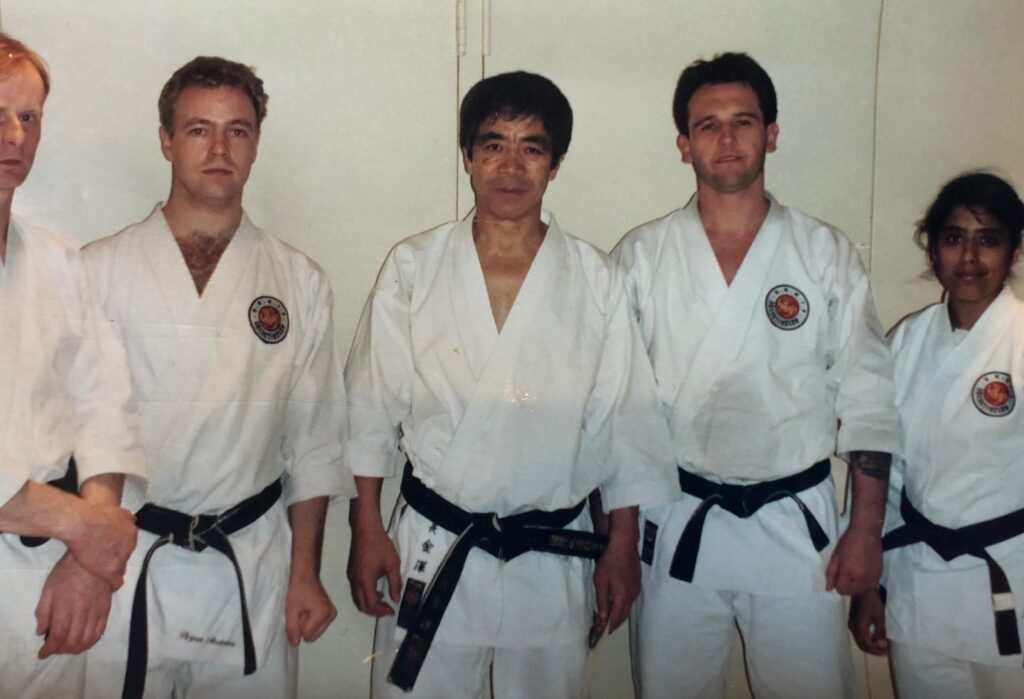
Hirokazu Kanazawa was one of the most celebrated graduates of that programme. He won the first JKA All Japan Championships in 1957, famously fighting with an injured hand, and went on to found Shotokan Karate-do International (SKIF). He later held 10th Dan.
Bryan trained under Kanazawa Sensei for many years and earned his 3rd Dan Shotokan grade with him. Kanazawa Sensei’s Karate was fast and strong but never stiff. He placed great weight on breathing and relaxation, and on moving naturally rather than with tension. It was Kanazawa Sensei who encouraged Bryan to take up Tai Chi to develop his Karate further, advice that still shapes our teaching today.
In our classes you’ll see that influence in how we teach relaxation before a strike: stay calm, stay loose, then commit fully.
Asano Sensei: precision and spirit
Shiro Asano Sensei was the other great influence on Bryan’s Karate. Where Kanazawa Sensei was known for flow, Asano Sensei was known for exact basics: posture, clean use of the hips, precise timing and distance, and above all a very strong spirit.
Training with both gave Bryan a balance of fluid movement and sharp precision. That balance is what we try to pass on.
The wider Shotokan family
Beyond his own teachers, a number of other Japanese masters shaped Shotokan, and Bryan trained with several of them on courses over the years. Each took the art in a slightly different direction:
- Keinosuke Enoeda, the “Tiger of Shotokan”, known for raw power and driving commitment.
- Hiroshi Shirai, who pioneered Karate in Italy and was known for fine technical detail.
- Taiji Kase, whose approach favoured deep, rooted stances and powerful close-range technique.
- Hidetaka Nishiyama, who took Karate to the United States and championed its traditional budo principles.
- Tetsuhiko Asai, who founded the Japan Karate Shotorenmei and brought whip-like, flowing techniques influenced by Chinese Martial Arts.
- Mikio Yahara, famous for a bold, dynamic style and fearless intent.
Together they show how broad one art can be. Some masters prized power, others timing or technical beauty. Seeing those differences helps us coach different people in the way that suits them.
What this means in a class today
Lineage matters because it gives a coach more than one way to help someone. A nervous beginner may need calm and relaxation; a strong teenager may need precision and control; a competitor may need spirit under pressure.
Today our main syllabus for children and adults combines this Karate with Chinese Kung Fu, including throws and groundwork, which Bryan has studied under Steve Rowe Sifu for more than twenty years. Members train at every range, from kicking distance to the ground.
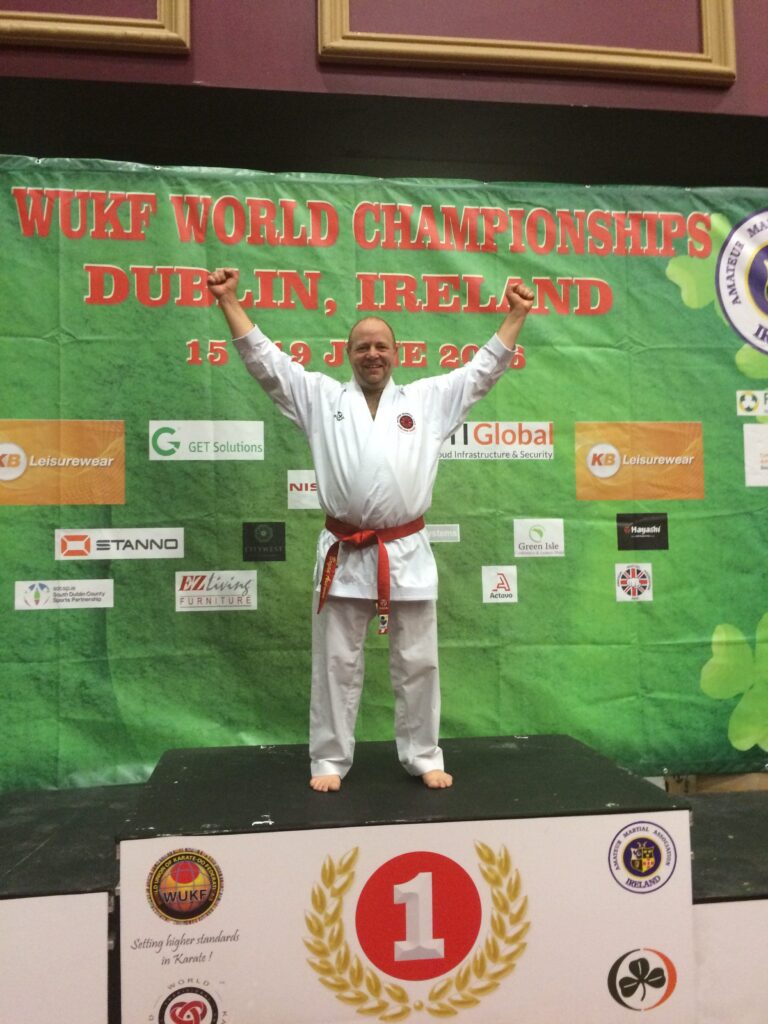
The same teaching has produced strong results in competition. Bryan was WUKF World Kumite Champion and a European Kata gold medallist, and now coaches the Shikon England national Karate squad. Shin Gi Tai members have won hundreds of medals in Karate, Kung Fu and Judo, including more than 120 golds, 6 world titles, 9 European champions and many British, English and Welsh champions.

Come and train
You don’t need to know any of this history to start. It’s simply there underneath every class, shaping how we teach. If you’d like to try Karate in Winchester, for yourself or your child, book a free taster class. You can also read more on our Karate page. For a wider look at Karate’s history and the three pillars of training, read the way of the empty hand.