
Parents play a big part in how well a child settles into Martial Arts. The things that help most are simple. Be there and watch in the early weeks, praise effort rather than results, and notice the small wins. Practise at home, keep the routine steady, and be careful what you say about your child in front of them. Above all, work with our coaches. We’ve been coaching children for more than 40 years, some of them as young as four, and these are the things we see make the biggest difference.
Being there gives a nervous child a safety net
When a child is new, it really helps them to know you’re close by if they need you. It also shows them you’re interested in what they’re doing and enjoying.
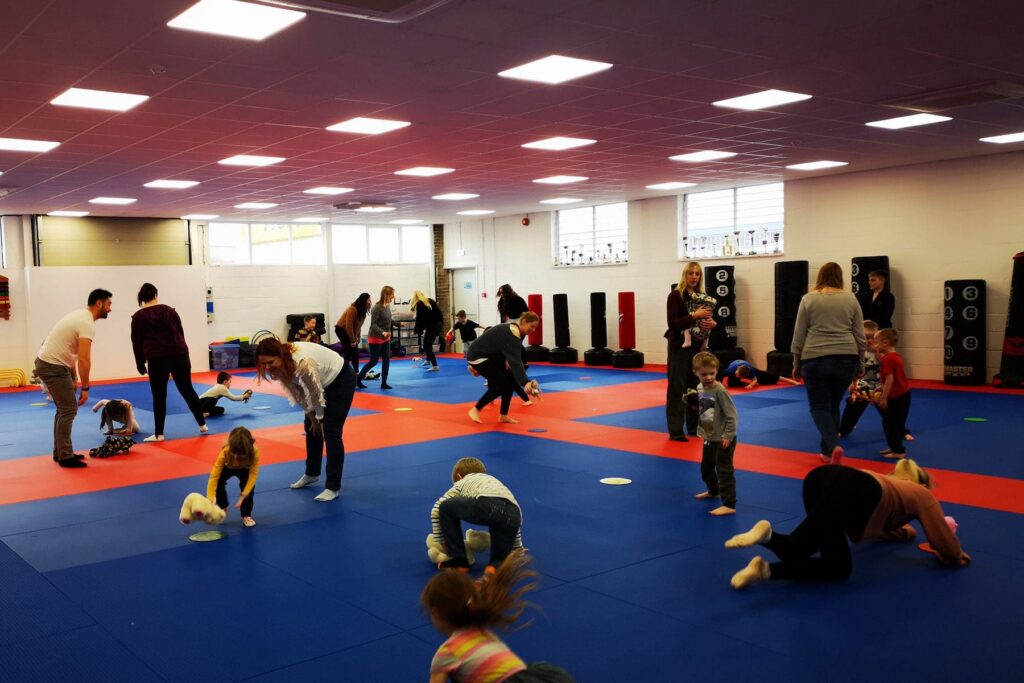
With our youngest members, the four and five year olds, a parent or an older brother or sister sometimes needs to step onto the mats with them for a little while. This week a little girl was nervous at the start of her class and told her mum she had to do it with her. So we asked Mum to take her shoes and socks off and come on too, and gave her a wink: she’d be off the mats in about 60 seconds. We started the register and the warm-up, and in less than a minute Mum was back off the mats. Her daughter was too busy enjoying the class.
A couple of times she glanced over, just to check Mum was still there. Mum didn’t need to do or say anything. That little bit of reassurance was enough, and we see the same with older children too.
Watch the class, not your phone
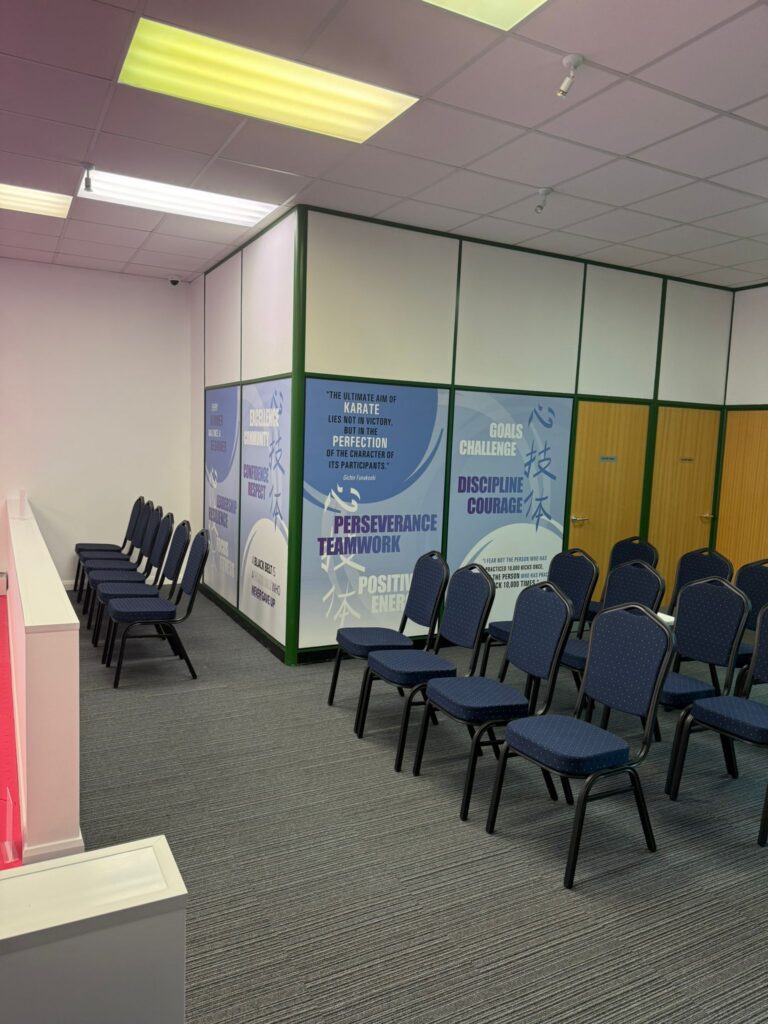
You’re welcome to watch from the seating beside the mats, with a hot drink if you like. The most helpful thing you can do is actually watch what your child is doing, rather than catching up on work on your phone or laptop.
It matters because of what comes next. On the drive home, you can talk about the class itself, not just say “well done”.
Praise the effort, not the result
“You were brilliant today” is kind, but it doesn’t tell a child much. Specific comments about effort help them notice their own progress. For example:
- “I loved the way you listened during that part of the class. You’ve really improved.”
- “That kick on the bag was really difficult. When you fell over, you got straight back up and carried on. That was brave.”
Questions work well too:
- “What did you enjoy most today?”
- “What should we practise at home together?”
As parents we often think about the big result, like a black belt. It’s an important milestone, no doubt about it. But it’s the hundreds and thousands of little steps along the way that really count, which is why progress is about more than belts.
Celebrate the small wins
Our coaches are what we call good finders. During every class, we look for something a child is doing well and make sure they know it.
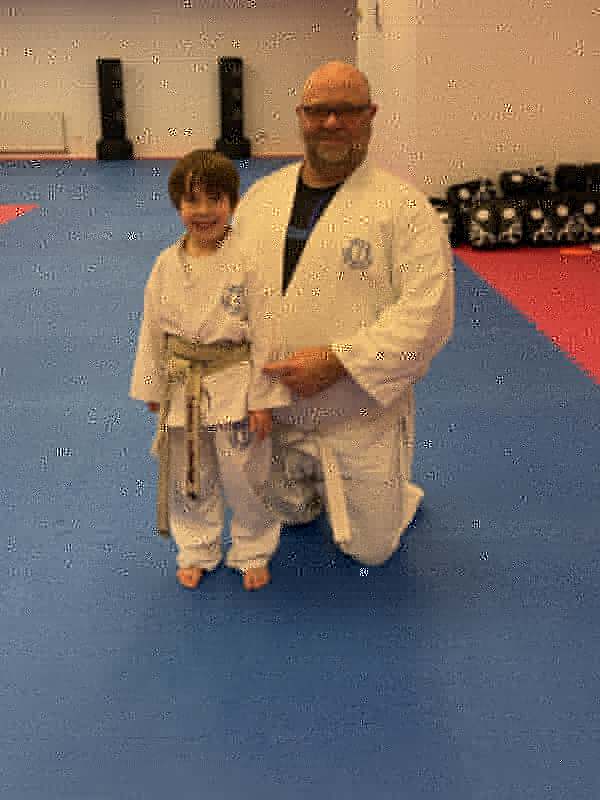
Last week in Winchester, Hamish, who is six, was doing the most brilliant roundhouse kicks. They were so good that we stopped the class, and Bryan lent him his own black belt to wear for the rest of the class. Hamish was our student of the week.
A win doesn’t have to be a perfect kick, though. For a younger child, it might be staying on the mats for the whole class, or being quiet and listening for ten minutes, then twenty, then right to the end. It might be counting to five in Japanese, then ten, or tying their own belt for the first time. Adults take these things for granted, but each one is a real step forward for a child.
Practise at home
Practising a move or technique at home is one of the simplest ways to help. When your child has done something a few times in the living room, it feels familiar when it comes up in class. They know they can do it, and that keeps the nerves away.
Keep the routine steady
Family life changes all the time, especially with young children. But where you can, keep training on the same day and at the same time, and get the kit ready the night before.
Small things make a difference. Recently a boy arrived for sparring and found his gum shield had gone into his hockey bag the night before and never made it back into his karate bag. Sparring without one isn’t safe, so he had to sit out, and he was understandably upset.
Let them carry their own kit
One of our rules is that children carry their own bag, kit and clothing in and out of the club. It’s their equipment, so it’s their job to look after it. That includes cleaning their sparring kit, and even putting their uniform in the washing machine.
Be careful what you say in front of your child
We often hear a new parent say something like, “He’s really shy, I’m not sure he’ll want to do this, I don’t know if he’ll be any good at it.” Meanwhile the child is standing a couple of feet away, listening to every single word. Without meaning to, we’re telling children who to be.
We like to reframe it. We don’t believe that child is shy. He’s just looking for the right group of people to train with and make friends with. (We’ve written more about this in is Martial Arts good for shy children?)
This week a new boy arrived looking a bit unsure, and his mum told him he was shy. We asked one of our older members to partner him for the class and be his friend. It helped both of them. The new boy had someone looking out for him, and our older member got the chance to help lead and teach.
Why “you don’t have to” can make the next step harder
Lots of things our children do will be hard at times, whether it’s school, swimming or Martial Arts. With activities outside school, we often say, “You don’t have to do it if you don’t want to.”
We say it out of love. But it can make the next step much harder, because it hands a child a get out of jail free card: “Mum or Dad said it’s difficult and I don’t have to, so I won’t.”
Later on, at college, university or work, things often are really hard, physically, emotionally and mentally. Resilience builds up over time, and it starts when children are young.
Every child is different, including brothers and sisters
Brothers and sisters often train together. One may find the physical side much easier than the other, and that’s perfectly fine. Children differ in how they’re built, how they feel and what they enjoy, so try not to compare them.
We once had two brothers whose parents wanted them to grow together, so they had to grade at the same time. One was a natural and one found it harder, and both enjoyed it. But the natural eventually gave up because he wasn’t progressing. When he stopped, both boys stopped training, and they both lost out.
When a child gets upset in class
Sometimes a child gets upset. They might have bumped a knee on the mats, or be frustrated that they can’t do something as well as they’d like, or they haven’t understood what we asked.
Our coaches watch for this. One of our young members sometimes finds longer explanations hard to follow, and that can make her tearful. Now a coach simply stands next to her. If things get too technical, the coach helps her calm down, explains it in a simpler way and gives her some encouragement. It’s made a real difference to how comfortable she feels in class.
With little bumps, we might ask a child to show us their “magic hand”. We give their palm a light touch and ask them to put it where the hurt is. Often it’s these tiny things children can do for themselves that take their mind off it and help them carry on. It’s part of what good coaching for beginners looks like.
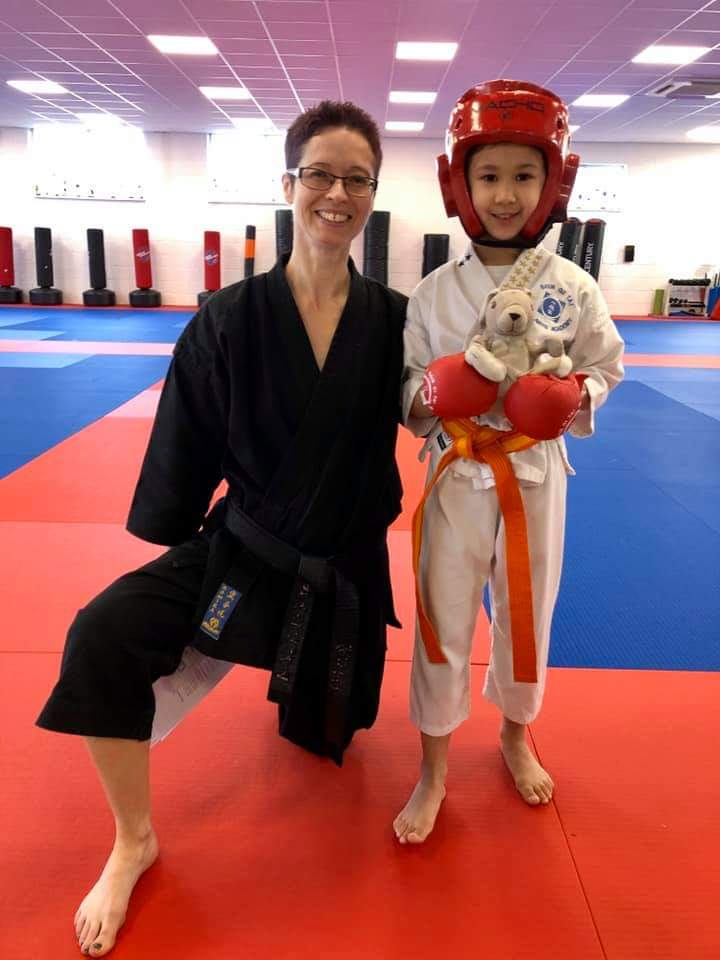
Parents and coaches working together
Sports scientists talk about the triangle between a child, their parents and their coach. A child does best when that relationship is strong, and above all when parents and coaches agree on what the child is working towards and how they’ll get there.
That support works both ways. We encourage children to keep up with their schoolwork, and parents can help with Martial Arts practice at home. Sometimes it’s as simple as asking the coach if you can take a short video of them demonstrating a move, technique or form. That becomes homework you can practise together, along with the key points the coach has asked your child to work on.
Talking to one another matters too. A while ago, a boy who’d been training with us for about six months was being rude to his mum at home, while being all sweetness and joy in class. Being polite and kind to others is at the heart of what we teach, so once his mum told us, we worked on it together. For about a month, one of our coaches sent him a message each day through his mum’s phone, asking how his day had gone, what good things he’d done and how he’d been kind to his mum. He wrote his answers in a diary. He soon realised his coaches cared about how he behaved at home too, and his attitude changed.
If your child is finding something hard, or you’d like to know what to practise at home, have a word with the coach after class. We’ll work out the next step together.
One thing to think about
If your child seems nervous or shy, it’s worth thinking about how the words around them shape how they see themselves. People have long debated nature and nurture: how much of who we become is there from the start, and how much is shaped by our experiences. Both play a part, but in our experience, confidence is something children can learn.
As the old saying goes, we reap what we sow. If we want our children to grow up confident, outgoing and good at talking to people, that’s what we need to help them practise. A lot of it comes down to small things: how we ask questions, how we respond and how we give feedback.
Frequently asked questions
Can I watch my child’s Martial Arts class?
Yes. Parents and carers are welcome to watch from the seating beside the mats.
Can I go on the mats with my child?
With our youngest members, the coach may invite you to join for a few minutes at the start. Most children are happily joining in very quickly.
What should I say to my child after class?
Be specific and praise effort. Mention something you saw them try, or ask what they enjoyed and what they’d like to practise at home.
How can I help my child at home?
Practise a move or two from class together, keep training on the same day each week, and have their kit ready the night before.
Should I carry my child’s bag?
We ask children to carry their own kit in and out of the club. It’s their equipment, and looking after it is part of their training.
Can I film the coach to help my child practise at home?
Please ask the coach first. A short clip of a coach demonstrating a move, with no other children in shot, can make really useful homework.
What if my child gets upset during a class?
Our coaches will help them calm down, often by standing alongside them or breaking things into smaller steps. Talk to the coach afterwards and we’ll plan the next step together.
Find the right class for your child
We run classes for 4 to 6 year olds, 7 to 10 year olds and 11 to 16 year olds. See all our children’s Martial Arts classes in Winchester, or get in touch to book a first class.