Most parents know the feeling. You ask for shoes on, teeth brushed or homework started, and the words seem to disappear somewhere between you and your child. It usually isn’t defiance. Children are still learning how to hold their attention on one thing while everything around them competes for it.
Focus can be trained. It improves with practice, like balance or reading, and a Martial Arts class happens to be a very good place to practise it.
What focus looks like in a Martial Arts class
In Japanese Martial Arts there are two ideas we come back to with children of all ages.
Kamae means your ready posture: how you stand, where your hands are, where you’re looking. When a child’s body is ready, their attention usually follows. Ask a class to take their ready stance and you can watch the room settle.
Zanshin is harder to translate. It means staying calmly aware, even after a technique is finished. It isn’t a tense stare. It’s the steady, relaxed attention of someone who is ready for whatever comes next, and it’s the kind of focus we want children to take into the classroom.
Why it carries over to school
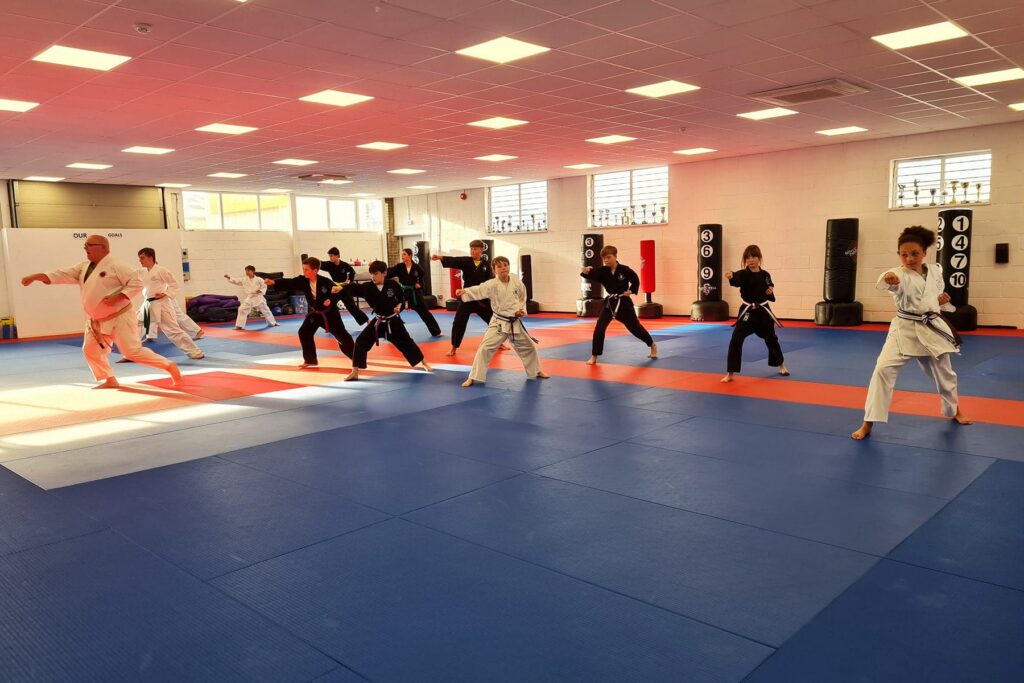
A class asks children to switch between different kinds of attention every few minutes. They listen while a coach explains a technique, watch a demonstration, practise with a partner, then remember a sequence of moves on their own. Each switch is a small piece of practice in noticing, holding and redirecting attention.
Research backs this up. In one well-known study, school-age children who took Martial Arts classes for three months improved their self-control and classroom behaviour more than children doing ordinary PE (Lakes and Hoyt, 2004, Journal of Applied Developmental Psychology). One study doesn’t prove everything, but it matches what parents tell us week after week.
For children with lots of energy, there is another benefit. Instead of being told to sit still, they’re taught how to control their movement and use their energy on purpose.
Mistakes are part of it
There’s an old Japanese saying: fall down seven times, get up eight. In class, a wobble on one leg or a forgotten move isn’t a failure. It’s information. The child adjusts and tries again, and that loop of trying, noticing and adjusting is what focus is made of.
We make a point of noticing effort, not just success. A child who stays with a difficult combination for five minutes has done something worth recognising, whether or not they’ve got it right yet.
Three things you can try at home
- Ready stance before homework. Ask your child to stand in their ready stance for ten quiet seconds before they start. It works as a switch from playing to working.
- One instruction, then two, then three. Give a short sequence (“shoes, coat, wait by the door”) and build up slowly. Praise the listening, not just the result.
- Ask what they practised. On the way home, ask your child to show you one thing from class. Remembering and explaining is focus practice too.
Watching it happen
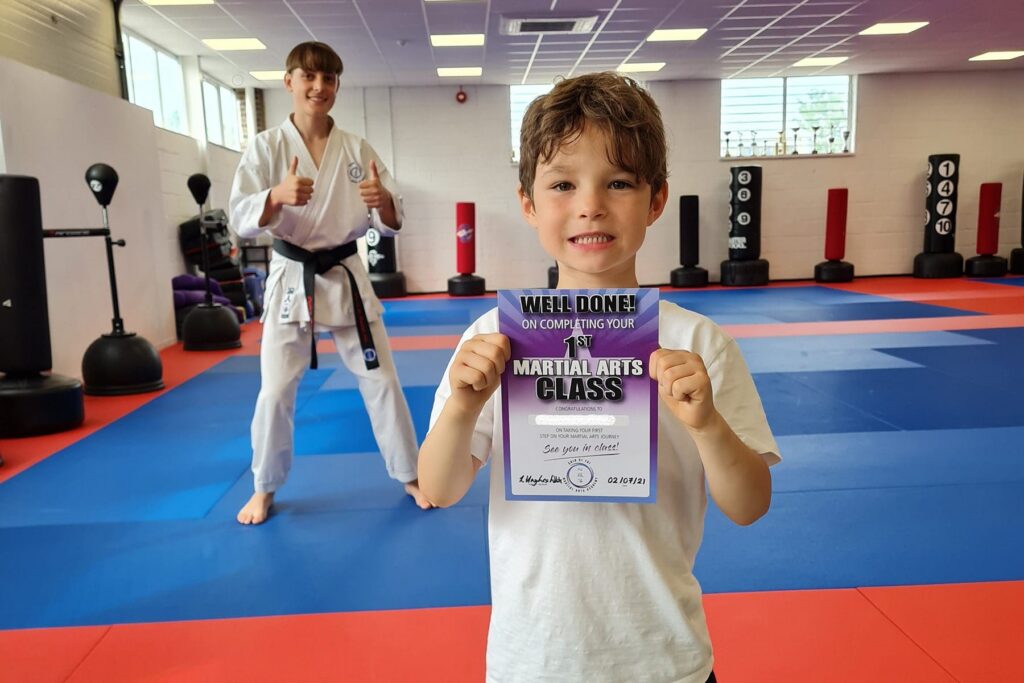
Parents can stay and watch every class from our seating area beside the mats, with a free hot drink. Many tell us the best moment is seeing their child struggle with something new, settle themselves and then get it.
Our classes are led by a team of qualified coaches. Head coach Bryan Andrews has trained in Martial Arts for more than 45 years and holds a Master’s in Advanced Sport Coaching Practice; you can meet the whole team here.
If you’d like to see how your child responds, book a free taster class. There’s no contract to sign on the day, and you’re welcome to ask the coaches anything. You can also see our kids Martial Arts classes by age.