
Football on Saturday mornings, gymnastics on Tuesday evenings, tennis camp in the summer. Parents sign children up for sport with the best intentions, and for a while it works.
Then, somewhere between eight and twelve, things often change. The kit stays in the bag. There’s always a reason not to go. One day you realise they’ve simply stopped asking.
Why so many children stop
One often-quoted figure from the United States is that around seven in ten children drop out of organised sport by the age of thirteen. The reason children usually give is simple: it stopped being fun. Pressure from adults, a focus on results and fixtures that swallow whole weekends can squeeze the enjoyment out.
That matters, because the years between five and thirteen are when many lifelong habits form: focus, resilience and the ability to keep going when something is hard.
When sport becomes the whole identity
Some youth sport is built to find a few elite performers. Football’s own figures suggest only a tiny fraction of the children playing organised youth football will ever play in the Premier League, and most players in elite academies are released.
Being released can hit hard. A 2016 study of young players released from Premier League academies found that more than half showed clinical levels of psychological distress in the weeks afterwards. When a sport becomes a child’s whole identity, there can be very little underneath when it ends.
So it’s worth asking: what is my child building now that will still be there whatever happens with their sport?
What research says about Martial Arts
A study in the International Journal of Environmental Research and Public Health compared children who did Martial Arts, children who played team sports and children who did neither. The children doing Martial Arts showed better executive function (the skills that help us focus, manage frustration and make good decisions) and higher school marks than both other groups.
That fits what we see. Martial Arts gives children a steady way to build self-control and resilience, with progress measured against themselves rather than a team sheet.
What keeps children training
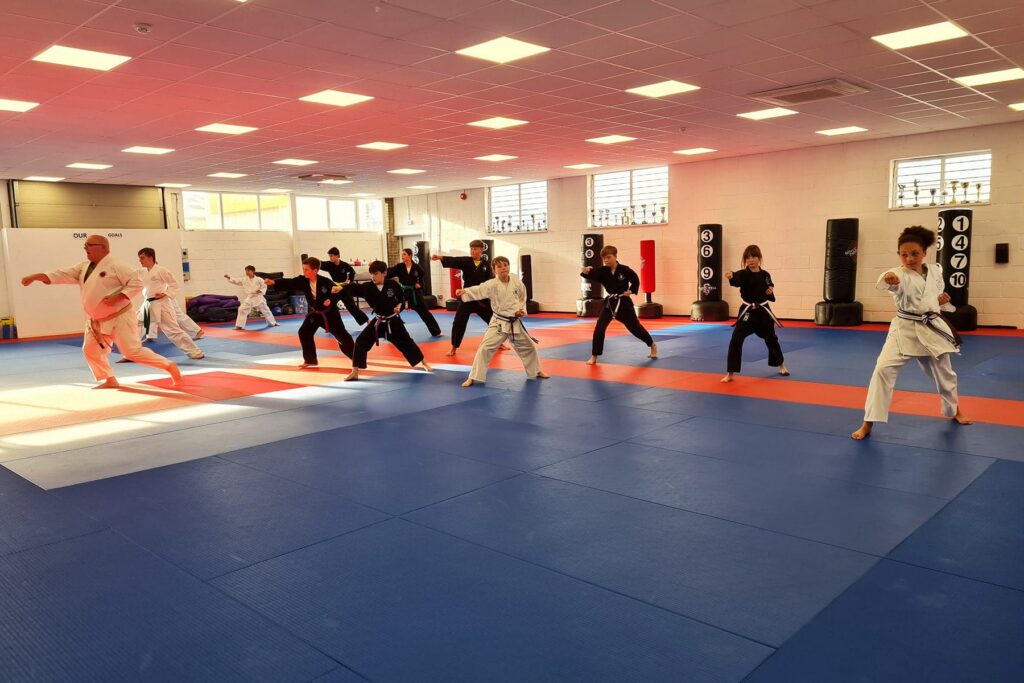
In our classes, a mistake is information, not a verdict. Children learn that the way through something hard is to keep going, and they’re recognised for effort as much as results. Some of our members go on to compete, and the club has produced national and world champions, but we’re just as proud of the child who finally gets a tricky drill after weeks of trying.
Classes are split by age, from Rising Heroes (4 to 6) through Young Legends (7 to 10) to Urban Warriors (11 to 16), so there’s always a next step and a reason to stay. Our main syllabus combines Karate and Chinese Kung Fu, including throws and groundwork, and parents can watch every class from the seating area beside the mats.
When exams take over
For teenagers it’s harder still. As parents we often push hard for good GCSE results, sometimes at the expense of everything else, and we see that a lot.
One young member’s parents were, understandably, focused on her education. She was in school all day, studying for two or three hours every evening and seeing tutors on Saturdays. It was stressful, and her mum wanted her to stop training. We asked her parents to come in and talk it through with us, because we felt training was doing her a lot of good: a break from studying, a way to let off stress and friends her own age.
She carried on. Several years later she’s approaching her black belt and finishing a degree that an aerospace company is paying for while she trains on the job.
Come and see
If you’d like your child to find an activity they keep loving, book a free taster class or see our kids Martial Arts classes in Winchester.