Is Martial Arts Good for Shy Children?
Martial Arts – A struggle with confidence
Is Martial Arts good for shy children? Is a question that we are frequently asked by parents. For many parents, one of the hardest things to watch is seeing their child struggle with confidence.
Some children naturally walk into a room and make friends instantly. Others stay close to Mum or Dad, avoid eye contact, speak quietly, or worry about joining in. There is nothing “wrong” with that. Every child develops differently. But as parents, we all want our children to feel comfortable in themselves, able to communicate confidently and able to cope with the world around them.
One of the most rewarding things we see at Shin Gi Tai Martial Arts Academy in Winchester is the transformation shy children make over time.
Not overnight.
Not through pressure.
Not by forcing them to “toughen up.”
But through patient encouragement, belonging, structure, and small consistent wins that slowly build real confidence from the inside out.
Confidence can not be forced
One of the biggest misconceptions parents have is that confidence comes from constantly pushing children outside their comfort zone.
In reality, children usually grow best when they feel:
- safe,
- accepted,
- supported,
- and part of something.
That is especially true for quieter or more reserved children.
Many parents worry:
“What if they refuse to join in?”
“What if they get upset?”
“What if Martial Arts is too intimidating?”
The truth is, a good Martial Arts school should never feel frightening or aggressive.
At Shin Gi Tai in Winchester, our Martial Arts classes are warm, welcoming and highly structured. We understand that for some children, simply stepping onto the mats for the first time is already a huge achievement.
That first small step matters. It’s the hardest thing of all.
BOOK A FREE TASTER CLASS
To book your FREE taster session click this link:
Every child starts somewhere
We have worked with many children over the years who were extremely shy when they first started.
One student, Daniel, spent his first eight weeks with his Dad standing on the mats beside him during class. For some clubs, that might have been seen as a problem. For us, it was simply part of his journey.
Then in week nine, something changed. Daniel turned to his Dad and said: “I can do it.”
From that moment on, he trained independently. Eight years later, he earned his Black Belt.
That is what confidence often looks like in real life: No dramatic overnight changes, but rather small brave moments repeated consistently over time.
Another student, Helen, barely spoke to us or even to her school teachers when she first joined. For months she remained very quiet in class. But slowly, through encouragement and feeling part of the group, she began to come out of her shell. A year later, she earned a major role in her school play. A year after that she joined our junior coaching team and helped to lead warm ups. Years later, she confidently delivered a presentation that helped her achieve her Master’s degree.
These stories are not unusual in Martial Arts when children are taught properly.
Why Martial Arts helps shy children
They become part of a tribe
Children need belonging.
At Shin Gi Tai, we often talk to children about how the class is “their tribe.” They are not walking into a room full of strangers forever. Over time, they become part of a supportive community with good friendships outside of the Martial Arts.
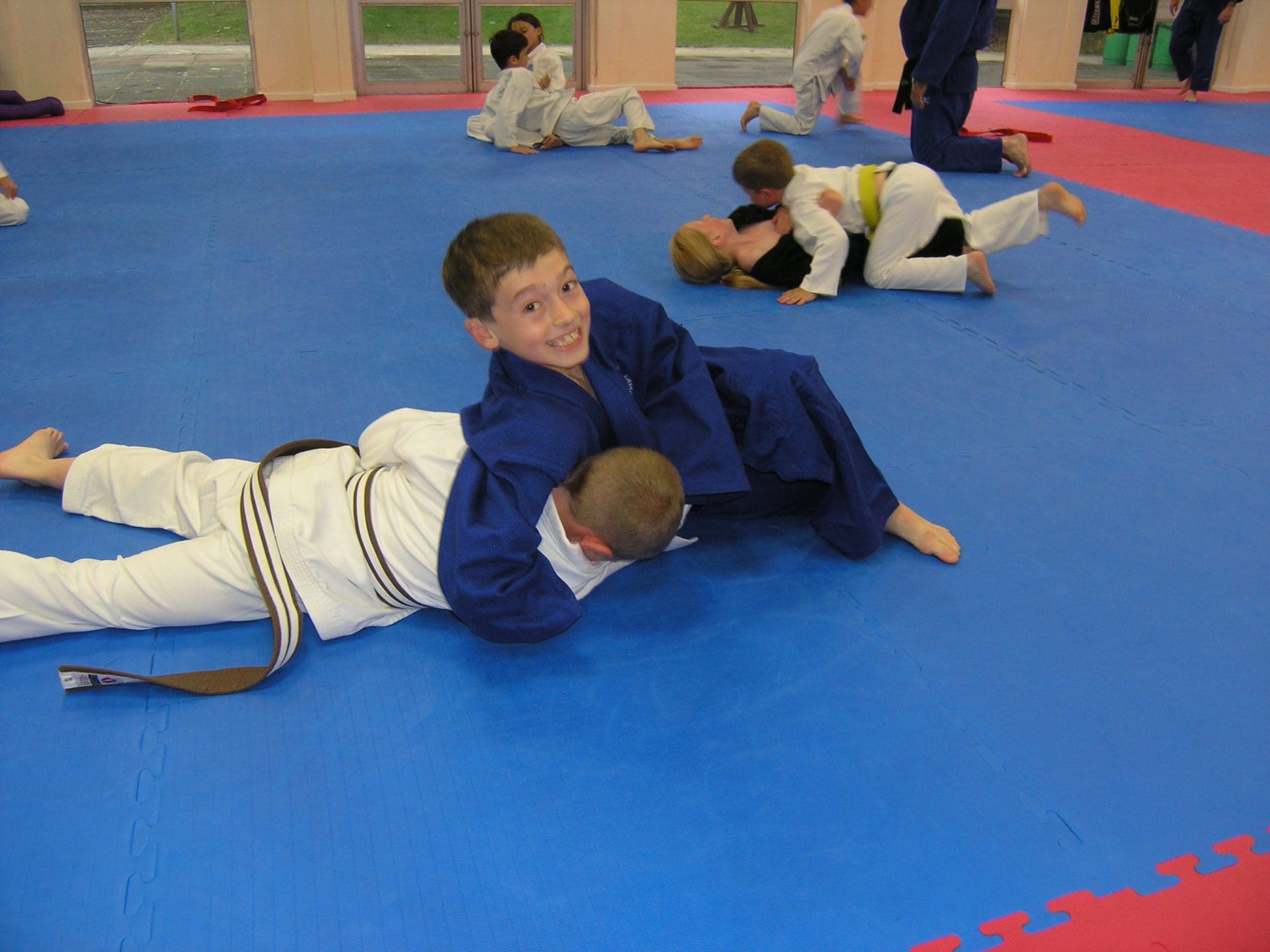
Many shy children struggle socially because they feel like outsiders. Martial Arts gives them shared experiences, shared goals and friendships that naturally develop over time. When someone new joins our classes, we make sure they feel welcome and part of the team from day one.
Often parents are amazed that their child:
- starts chatting to classmates,
- looks forward to seeing friends,
- attends club activities outside of class,
- and slowly becomes more socially confident.
For some children, Martial Arts becomes the first place where they truly feel they belong.
Progress Happens in Small Safe Steps
A good Martial Arts programme does not throw nervous children into the spotlight immediately. Confidence grows gradually.
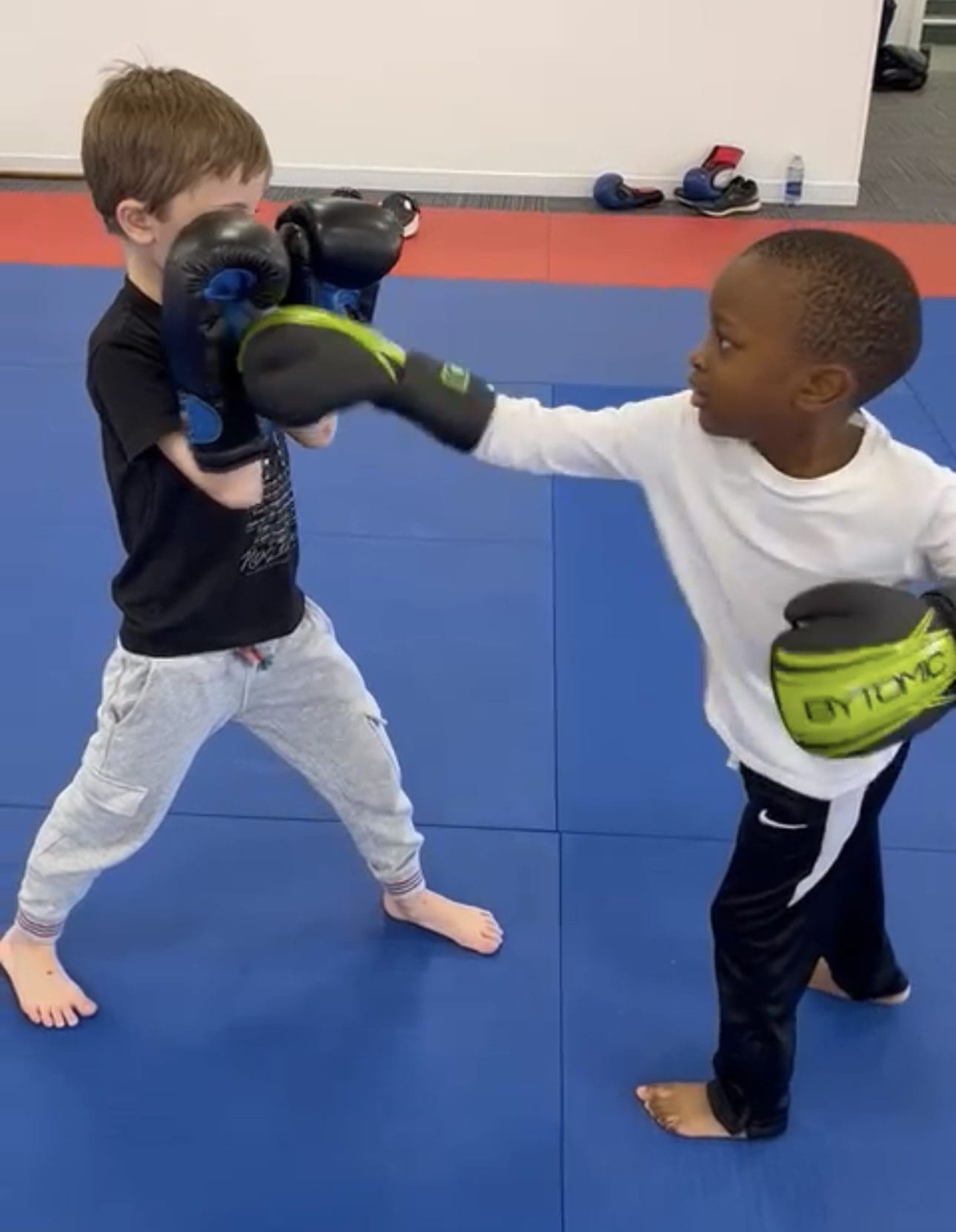
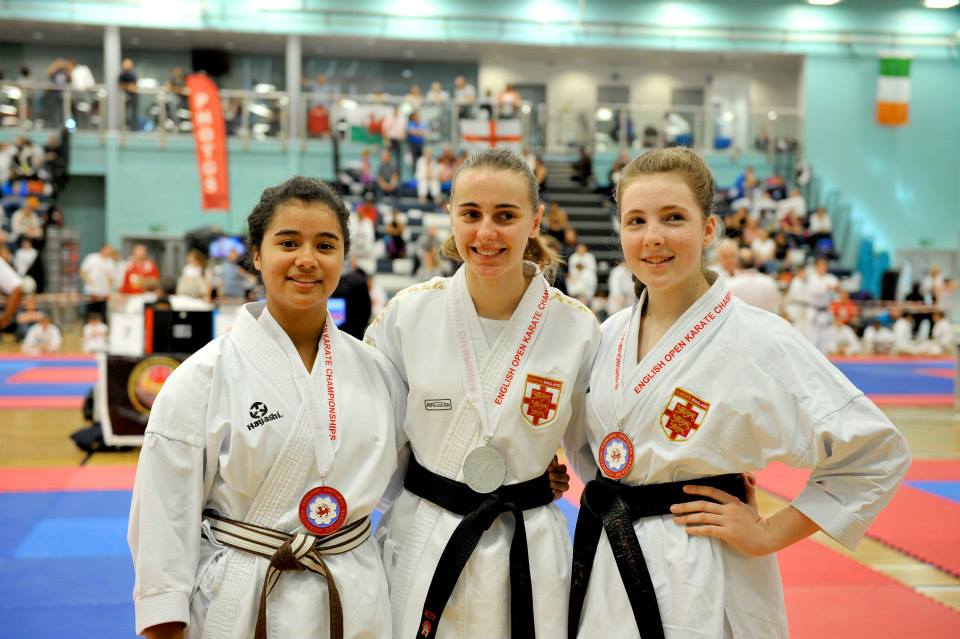
For example, at first we might count techniques together as an entire class so nobody feels singled out. Later, we may encourage children through positive recognition. Sometimes we stop the class and say: “Everyone look at Daisy’s kick — that was excellent. I want you all to try and kick like her.”
This is incredibly important. Children begin learning that attention does not have to feel scary or negative. They start associating being noticed with encouragement and achievement instead of embarrassment. Over time, many children who once hated attention go on to help coach newer students themselves. Watching that transformation is one of the most rewarding parts of teaching.
Martial Arts Gives Children Earned Confidence
Real confidence is not built through empty praise.
Children build self-belief when they overcome challenges themselves.
In Martial Arts, children experience:
- learning new skills,
- achieving belts,
- improving gradually,
- overcoming nerves,
- and seeing themselves succeed.
This creates something much deeper than temporary confidence.
It creates resilience.
A child begins thinking: “I was nervous or scared before… but I managed it.” Can I tell you a secret, Adult’s often feel like this too.
That mindset carries over into school, friendships, presentations, sports and life in general.
Structure Helps Children Feel Secure
Many shy children thrive in structured environments.
At Shin Gi Tai, classes are organised, professional and predictable. Children know:
- where to stand,
- what is expected,
- what happens next,
- and how to succeed.
For nervous children, this matters enormously.
Chaotic environments can increase anxiety. Structured Martial Arts classes often help children feel calmer and more settled because expectations are clear and consistent.
We also separate classes by age group:
- 4–6 years,
- 7–10 years,
- and 11–16 years.
This helps children train with others at a similar developmental stage and confidence level.
The role as Parents we play
Who is more nervous? The child or the Parent?
One thing that surprises many people is how important parental involvement can be.
At Shin Gi Tai, parents are always welcome to stay and watch classes. They do not have to, but in many cases children progress better when parents are positively involved in the journey.
Children look to their parents for emotional cues. If a parent is calm, encouraging and supportive, children usually settle much faster.
Sometimes parents unintentionally make things harder by giving children too many escape routes: “You don’t have to do it if you don’t want to” or telling a stranger in front of their child “my son isn’t very good at learning things, he finds it hard.”
While this comes from kindness, it can sometimes reinforce anxiety rather than help children overcome it.
Children often need gentle encouragement combined with reassurance.
Not pressure.
Not forcing.
But calm confidence from the adults around them.
Very often, once children get through those first few nervous weeks, they absolutely love it.
What our members think
I'd like to speak to a coach!
Please enter your contact details below with the specific questions that you may have or if you'd like to find out more about how we can help you.